
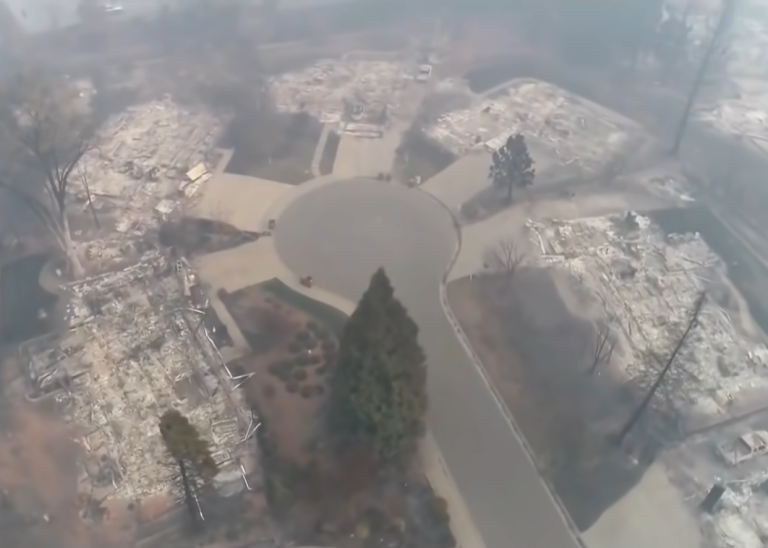
In 2018, California experienced its deadliest and most destructive wildfire. The Camp Fire in the town of Paradise killed 85 people and burned nearly 20,000 homes and businesses. But if you drive by Paradise today, you’d see signs of a revival. Mike Petersen, manager of the Ace Hardware Store that somehow weathered the inferno, lost his home, like most people there!
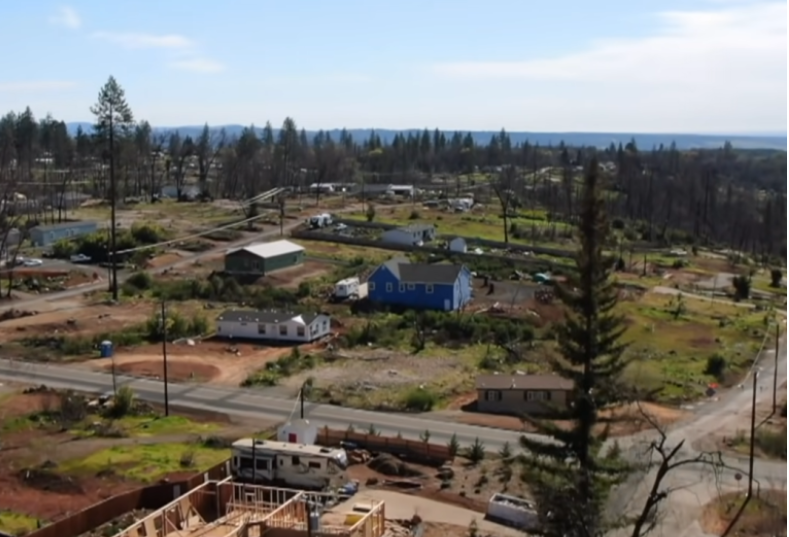
He is now filled with hope whenever he looks out his window at his neighborhood. “These three homes were not there a year ago,” he told CBS News correspondent Ben Tracy. “A lot of people were skeptical about how many people would rebuild. It’s encouraging to see the progress.” Petersen isn’t just rebuilding a house; he’s rebuilding one that will withstand future fires.
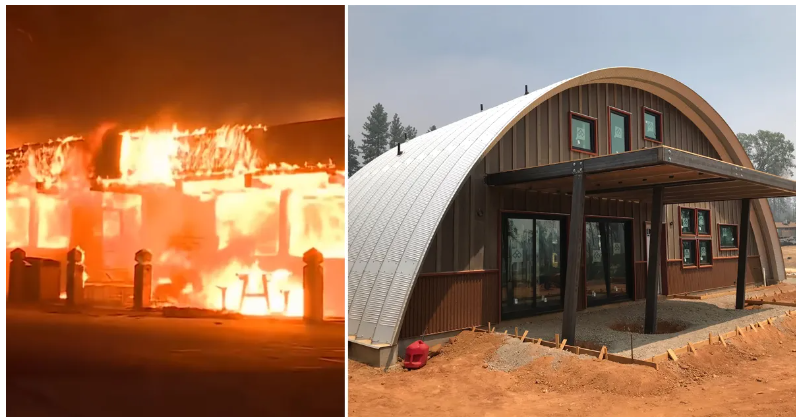
He and his wife are getting ready to move into a two-bedroom house that looks like a modern barn. They like the architecture, but the main draw is that it’s not meant to burn. “Do you think you’ll be less concerned about your house?” Tracy inquired. “Yes. “And my insurance company is thrilled,” Petersen replied. The “Q Cabin,” short for “Quonset hut,” is being built by Design Horizons.
It’s named after Quonset Point, a naval base in Rhode Island where the corrugated metal-roofed structures were first built during WWII. “It’s non-combustible,” said Vern Sneed, the company’s owner. “It’s not something you can really light on fire.” According to Sneed, a Q Cabin costs about the same as a traditional 2×4 house.
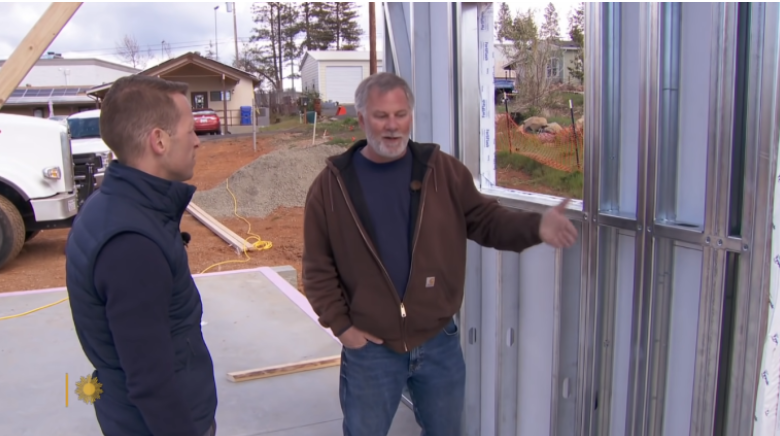
“We’d have non-combustible siding out here,” he said. “Then we have our non-combustible sheathing.” Then there’s the non-combustible structure. So, before you could get to the inside, you’d have to go through all of these non-combustible layers.” Most homes burn in wildfires, according to scientists, because embers get in between roof shingles or window frames. The Q Cabin lacks these entry points.
“I understand why you won’t call this ‘fireproof,’ because you could never guarantee that. But this is about as close as you’re gonna get?” Tracy asked.“This is about as close as you can get,” Sneed affirmed. Also, part of the problem is the town’s proximity to nature. Communities like Paradise are known as the Wildland Urban Interface, where the outdoors collides with a person’s front door. Almost 50 million homes are in those areas prone to wildfires.
“I think noncombustible housing is the future,” Sneed said when asked if this is the future of home-building, especially now that climate change is accelerating and natural disasters are happening more often. The Camp Fire also did a lot to change people’s perspectives. “I think people just let go of their need to control because we all learned that there is no such thing,” said Gwen Nordgren, president of Paradise Lutheran Church.
The church is also rebuilding, constructing a four-plex Q Cabin that will replace the parsonage building that once housed their pastor and was destroyed in the blaze.The cabin will be rented to four families to generate income for the church, which lost almost half of its members after the wildfire. But now, people are coming back, making Paradise the fastest-growing city in the state of California.
“Nobody who was here gave up. This is Paradise, brother. Nobody gives up. There’s a spirit in this town that was here before the fire, and that’s here now, and it never went away,” Nordgren said. Click on the video below to learn more about these fire-resistant homes.