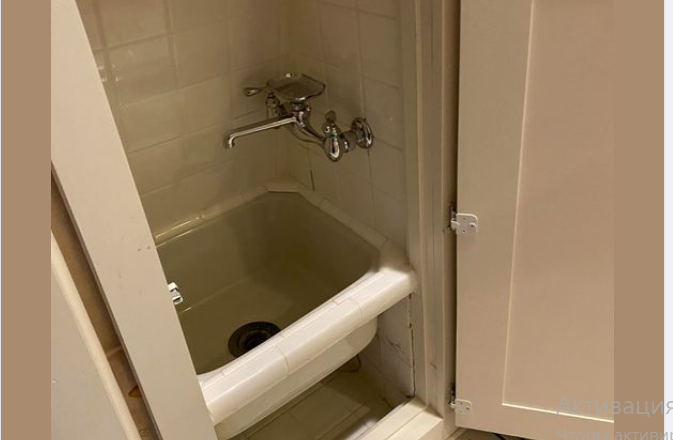
Certain features in the history of domestic architecture and interior design reveal a lot about their era’s lifestyle, social institutions, and ergonomic considerations. One such curious piece is an ancient sink constructed exclusively for mopping and situated at knee height. This simple yet creative feature, which was previously prevalent in stately mansions and manors, provides an intriguing peek into the practical aspects of household management as well as the history of home architecture to accommodate the demands of its residents.

These historic sinks, made of materials ranging from stone to early kinds of porcelain, were strategically positioned at a lower height to make it easier to fill and empty mop buckets without having to lift them. This design concept not only emphasized the practicality and efficiency of household activities, but also demonstrated a strong concern for the well-being and comfort of the servants or staff members who performed these jobs.
The knee-level mopping sink was often found in utility rooms or back halls, away from the main living areas, emphasizing the era’s preference for keeping domestic tasks out of the sight and mind of the household’s more elegant members. Its presence reflects a time when manual labor was an essential part of daily life, and technologies that streamlined such chores were highly prized.
Beyond its functional applications, the antique cleaning sink exemplifies the craftsmanship of the time. These sinks were frequently attractively crafted, with some containing elaborate details or inscriptions, transforming a strictly functional item into an object of aesthetic value. Because of the materials’ endurance, many of these sinks have survived until the present day, when they are treasured as unique historical antiques or repurposed as ornamental components in modern homes.
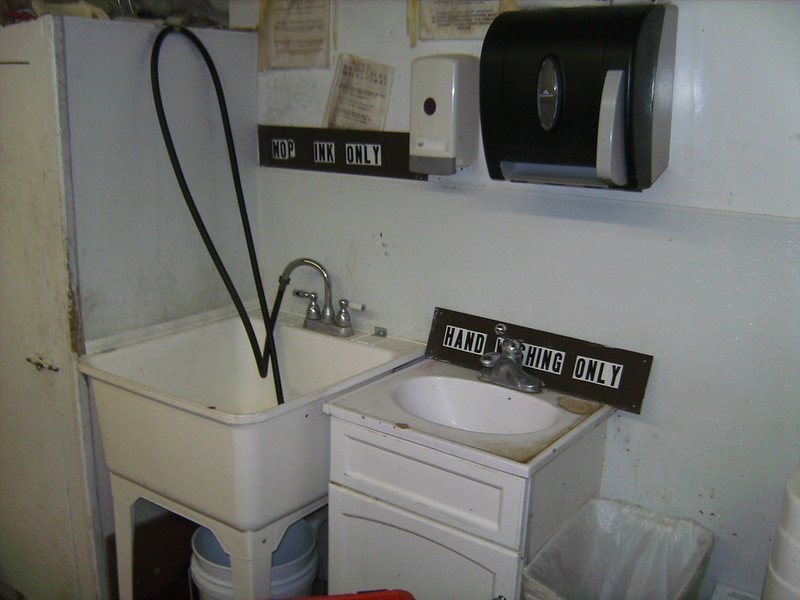
The antique mopping sink is a cultural and architectural remnant that provides insight into previous domestic practices. It serves as a reminder of how home design is constantly evolving in response to shifting employment and social status dynamics inside the household. For historians, architects, and antique collectors, these sinks are not only remains of usefulness but also emblems of an era’s attitude to functionality, design, and the demarcation of social spaces within the home.