Our bodies are incredibly remarkable tools. So astounding, in fact, that I doubt the vast majority of us ever recognize the marvel of natural evolution that we represent. If you think about it, we’ve evolved from beings similar to modern-day chimps to walking, talking creatures capable of constructing complex societies and sending things to other planets in the blink of an eye (at least when the age of the universe is considered).
One fascinating aspect of our species’ evolution is that we are nearly identical to what we were 20,000 years ago. Despite the fact that we now live in a world that is diametrically opposed to the one in which our forefathers lived. Even more intriguing is the notion that we are continuously evolving, but at such a slow pace and over so many generations that we rarely see any trace of it.

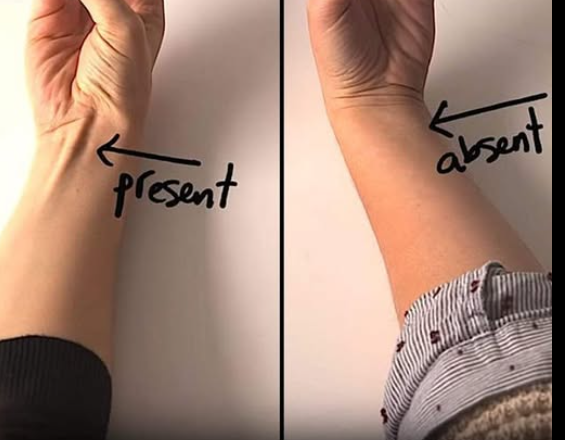
Which is why we thought we’d draw your attention to the connection between a seemingly benign tendon in your wrist and the continuing trip we humans are taking as we trudge onward into the future. The tendon in question is attached to an old muscle known as the palmaris longus, which is now being phased out in 10-15% of the human population.
According to the studies we discovered, the palmaris longus is essential for creatures that use their forearms to move around, such as lemurs and monkeys. The muscle, for example, allows them to swing more easily from branch to branch, making it an important aspect of their anatomy. And here’s when things get interesting. Ground-dwelling apes, such as gorillas, have gradually lost the function since they no longer rely on their forearms to get around as much as they formerly did. Similarly, people have begun to lose the tendon that links to the palmaris longus.
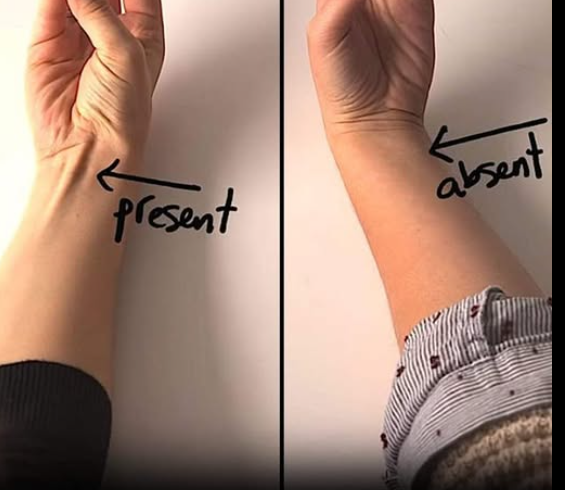
As previously noted, evolution tends to move slowly, therefore nearly 90% of humans still retain the tendon, yet evidence suggests that it is gradually being phased out. A simple test can be performed at home to determine whether or not you still have yours. First, rest your forearm on a level surface, palm up, then touch your pinky finger to your thumb and elevate your hand slightly off the surface.
Have you finished it? If you can see a distinct band in the center of your wrist (this is your tendon), you’ve got it. If you don’t, you’re probably one of the few people who have already abandoned the need for the tendon.