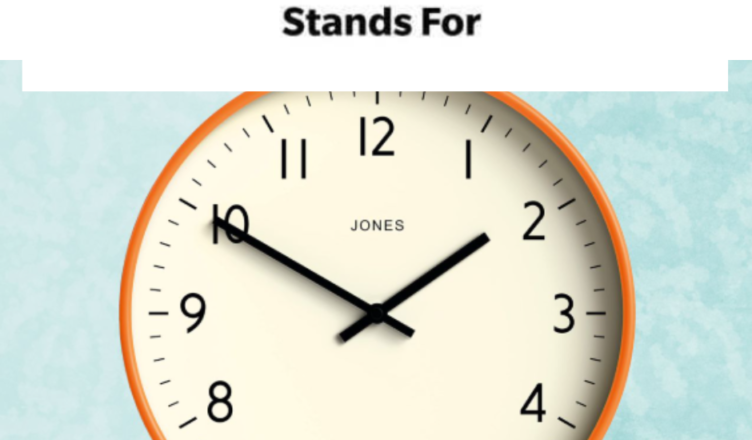
Have you ever uttered “It’s 5 o’clock” and then halted, wondering, “What’s with the ‘o’ in o’clock?” Well, you are not alone. This tiny little letter, which we frequently speak without thinking, has puzzled humans for centuries. Let’s go into the significance, history, and allure of the mysterious “o.” In medieval times, when church bells tolled the hours and sundials indicated the passing of hours with sunshine and shadows, people frequently referred to time as “the third hour of the day.”

As timekeeping evolved, mechanical clocks became the go-to tool, and the phrase “of the clock” made it apparent that people were talking about clock-time, not just an estimate based on astronomical guessing, such as the sun’s position. Enter o’clock. As English progressed, people became tired of long sentences, and “of the clock” became “o’clock.”
The “o” in “o’clock” is a shortcut for the word “of.” When you say “three o’clock,” you actually mean “three of the clock,” indicating that it is not an astronomical observation. Britannica notes that “when we use the word o’clock, we are saying that it is a specific hour ‘according to the clock.'” For example, ‘it is almost four o’clock’ is equivalent to ‘it is almost four according to the clock.'” It’s a shorthand that has endured decades of language evolution, making its way into modern English from simpler times when clarity was essential.