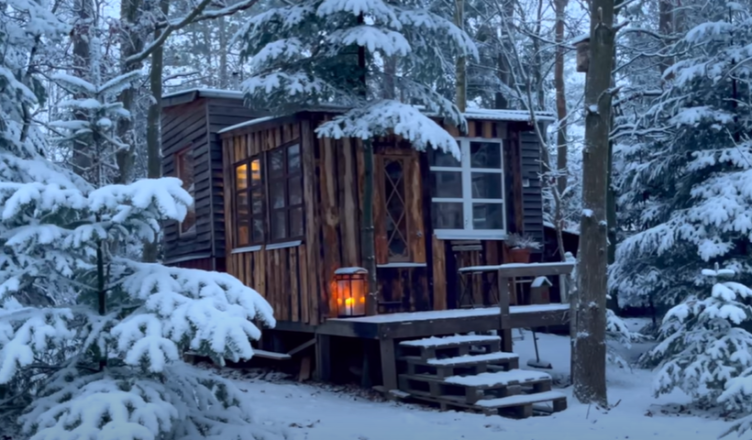
Anders and his dog, Borsimat, live contentedly in a self-sufficient little house that he built on a budget. This off-grid home, completed over four years ago, demonstrates Anders’ devotion to sustainability. He designed a comfortable, eco-friendly space with minimal environmental effect by incorporating natural and recycled materials such as untreated larch wood, reclaimed metal, eco-friendly insulation, and repurposed windows.

Anders’ quest for a simpler, more sustainable living began with a strong yearning to escape the frantic city life. “I was working in the city for a number of years, and I just realized that city life and the hectic life just wasn’t for me, and I wanted to break out of that,” according to him. Anders envisioned living in a self-sufficient tiny home in order to disconnect from the usual 9-to-5 grind and reconnect with nature.

He saw living on a lower income as a way to gain the flexibility to lead a simpler life. By reducing his spending and experimenting with different approaches to life and work, he was able to focus on what was most important to him. This insight inspired him to pursue a self-sufficient tiny home lifestyle, allowing him to feel more connected to nature.

Anders was lured to off-grid life because it allows him to get closer to nature. In this lifestyle, the natural world has a direct impact on everything from electricity to water and heating.This lower cost enables him to spend more time in nature and improve his skills. Looking ahead, Anders intends to strengthen his commitment to sustainability.

“I believe I am now ready to embark on a new chapter in my tiny living journey. So I’ll be converting this site into a more self-sufficient permaculture homestead and building a new little house,” he explains. Watch the video below to take a tour inside Anders’ self-sufficient tiny home.