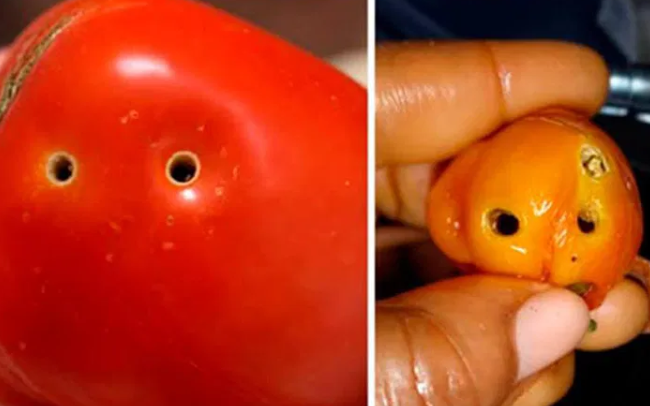
You’ve probably seen little holes in your tomatoes when you inspect them. Your first reaction may be to toss them away because you are concerned that they are damaged or unhealthy to consume. However, before eliminating them, it is critical to understand what causes these holes and whether they damage the tomato’s quality.
Why are there holes in tomatoes? There are various reasons why tomatoes develop holes. Among the most prevalent are:Insects and pests: Some insects, such as tomato worms and some beetles, puncture the fruit’s skin while feeding. Mechanical damage: When tomatoes are harvested or transported, they might develop small holes. Calcium deficiency or development problems: Nutritional inadequacies can sometimes interfere with tomato skin formation.

Is it okay to eat a tomato that has holes? Most tomatoes with a little hole are still safe to consume. If there are no evidence of mold, rot, or an unpleasant odor inside the tomato, simply cut out the problematic part and use the rest without issue. However, if the hole is surrounded by dark patches, mold, or the tomato has an unpleasant odor, it should be discarded since it may be contaminated with bacteria.
Alternatives To Waste Instead of tossing away these tomatoes, consider the following options: Cut and utilize the healthy part: If the damage is minor, you can still use the rest of the fruit in sauces or stew. Make compost: If the tomato is seriously damaged, use it to improve the soil in your garden. Recycle the seeds: If the tomato is in good condition inside, you can save its seeds to start new plants.

In conclusion, it is not always necessary to discard tomatoes with holes. Evaluating their condition will help you reduce waste and make better use of these delicious fruits.