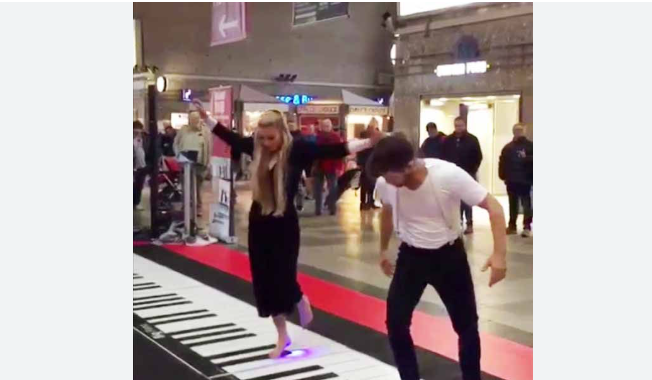
In the heart of Nuremberg, Germany, a delightful blend of classical music and playful innovation is turning heads: Johann Sebastian Bach’s iconic Toccata and Fugue in D Minor performed on a giant floor piano. This unexpected marriage of baroque brilliance and whimsical performance art captures the imagination of tourists and locals alike.
The Toccata and Fugue, with its dramatic opening and thunderous organ lines, is one of the most recognizable pieces in the classical repertoire. Believed to have been composed in the early 1700s, its bold, almost haunting style has made it a staple in everything from concert halls to horror films. But in Nuremberg, this masterwork takes on a new life—one played not with fingers, but with feet.

Installed in a public square or cultural venue, the giant floor piano allows performers (and sometimes curious onlookers) to step on oversized keys to create music. Watching someone perform a complex piece like Toccata and Fugue this way adds a layer of physicality and fun rarely associated with Bach’s compositions. It’s a tribute not only to the timelessness of his work but to the creativity of modern-day musicians and artists who find fresh ways to bring classical music to life.
As Nuremberg continues to embrace art in public spaces, this fusion of old and new reminds us that music, no matter how grand or historic, can always find a new stage—and sometimes, it’s under our feet.