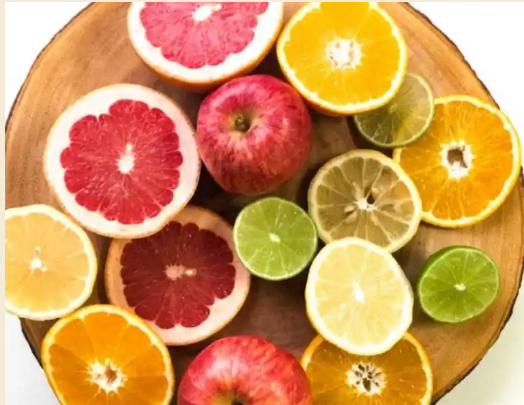
The rising link between citrus and depression is receiving attention, with recent research indicating that these fruits may improve mood. While the ancient adage “an apple a day keeps the doctor away” emphasizes the advantages of apples, current study indicates that citrus fruits, such as oranges and lemons, are great mood enhancers. A recent study found that eating citrus fruits every day may help lessen the incidence of depression, adding to the evidence that nutrition plays an important role in mental health.

Depression, which affects millions of people worldwide, remains difficult to treat, with 70% of patients failing to react to medicines. In search of a dietary remedy, Dr. Raaj Mehta, a physician at Massachusetts General Hospital and a Harvard Medical School instructor, observed that eating one medium-sized orange per day reduced the incidence of depression by 20%.
“I was working with a fantastic postdoc named Chatpol Samuthpongtorn, who was reading through the literature on depression, looking for an interesting project to take on,” Dr. Mehta revealed in an interview with Harvard Gazette. “And he came across this one paper from 2016 that pointed to the possibility that citrus lowers the risk of depression.”
This conclusion prompted researchers to delve deeper into the Nurses’ Health Study II. This long-running study, which began in 1989, tracks risk factors for chronic diseases in women. Every two years, nearly 100,000 people participate in the study, which collects thorough information about their lifestyle, diet, medications, and health. By evaluating this data, researchers discovered that women who consumed more citrus fruits had decreased incidences of sadness over time.
Dr. Mehta’s research strengthened the link between citrus and depression, finding that citrus fruits had a distinct effect that other fruits and vegetables lacked. He proposed that this impact could be attributed to an increase in F. prausnitzii, a good gut bacteria associated to enhanced health. His findings revealed that nurses who consumed more citrus had greater amounts of these bacteria, indicating a potential link between gut health and mental well-being.

Dr. Mehta expanded his study to include men and discovered the same results: those who consumed more citrus had a 20% lower risk of depression and higher levels of good gut bacteria. He hypothesized that these bacteria could help control mood by altering neurotransmitters like dopamine and serotonin produced in the gut. His notion suggests a relationship between intestinal health and mental well-being.
“There’s so much evidence now suggesting a strong link between the gut and the brain that I was not surprised to find more,” he told the local newspaper. “At the same time, I had never related citrus with the brain before we discovered these findings. You frequently hear that fish is ‘brain food,’ but nobody thinks that oranges are brain food.”
Meanwhile, Dr. Andrew Chan, a gastroenterologist at Massachusetts General Hospital and co-author of the citrus and depression study, stated that the advantages were most obvious in patients who consumed at least five servings of citrus per week for four years or more.
While the study focused mostly on oranges and grapefruit, he proposed that other citrus fruits, such as lemons and limes, could have similar benefits.
Consuming citrus is thought to boost levels of F. prausnitzii. These gut microorganisms may contribute to better mental wellness. Other meals that may improve mental health According to research, eating a Mediterranean diet rich in vegetables, fruits, legumes, nuts, whole grains, and olive oil can help reduce anxiety and sadness.