
At sixty-two, I never saw myself sleeping on a pullout couch in my own son’s living room, with my entire life packed into two suitcases.
The ink on my divorce papers had hardly dried when Marvin proposed this “temporary arrangement.” Temporary—as if the dissolution of my thirty-year marriage were nothing more than a little blip.
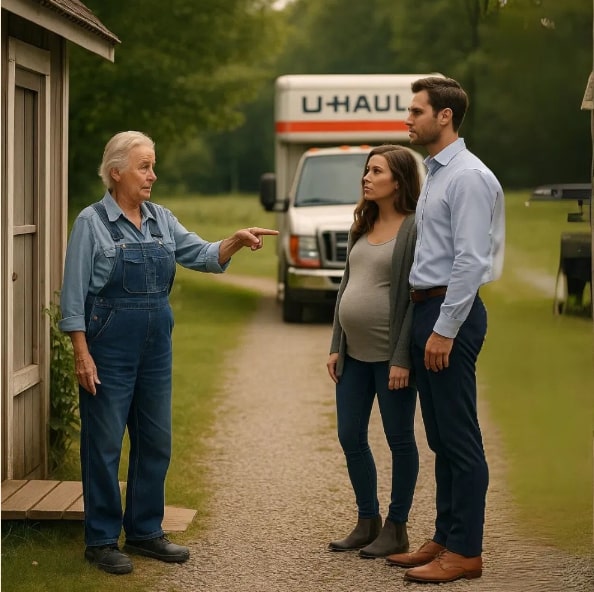
Sunlight filtered through Dorothy’s pristine white curtains, casting shadows on the wooden floors I wasn’t allowed to walk on with shoes. The instructions were unstated but clear: don’t use the fluffy towels, don’t touch the thermostat, and don’t cook anything that could stay in the air. I had become a shadow on the outskirts of their immaculate universe.
“Mom, you’re up early.” Marvin stood in the kitchen doorway, already dressed in a charcoal suit. At thirty-five, he inherited his father’s keen features and my obstinate will—though he appeared to have forgotten where that attribute originated from. “Couldn’t sleep,” I said, stirring instant coffee into microwave-heated water. The nice coffee machine was off-limits—a wedding gift, Dorothy explained with a pinched look.
“Dorothy and I were talking,” he said, his youthful nervousness showing. “We think it’s time you considered something more permanent.” The coffee was suddenly harsh. “Permanent?” “Senior Communities. They have wonderful amenities these days.” “Of course,” I set my mug down more forcefully than required. “How foolish of me to think I might stay until I found my footing.” “Do not take it that way. We’re trying to help.”
“Help?” The word cut sharper than I intended. “Yesterday, you drove Dorothy’s mother to the Maple Street complex. “The one with granite countertops.” He swallowed. “That is different. “She has specific needs.” “My specific need is a bed that isn’t a couch.” Dorothy entered with her hair in a lovely bun, flowing across the kitchen without glancing at me. “Morning, Martha.” My entire name served as a continual reminder that I was just a guest who had overstayed her welcome.
Last week, the spare room, which had previously been heaped high with storage boxes, was repainted pastel yellow in preparation for their first child. Dorothy was barely showing, and the crib buying had already begun. “Dorothy requires space for the nursery,” Marvin explained. “She’s been anxious.” “I wasn’t asking to stay there forever—just until I had somewhere else.” Dorothy’s green eyes greeted mine, cool and calculating. “Martha, this is about boundaries.” About what’s appropriate.”
“Suitable?” I echoed. “And what’s suitable for a woman whose husband of thirty years replaced her with his secretary?” “Mom, don’t—” “So your unborn child’s comfort trumps your homeless mother’s desire for a bed? Is that what you are saying? His color has fading. “You are not homeless.” Dad offered the Florida condominium.” “He offered it in exchange for me handing up half of our assets. “Very generous.” Dorothy’s blender screamed, erasing Marvin’s next words. When it came to a halt, there was a profound silence.
“If you wanted comfort,” Marvin whispered, “you should’ve stayed married to Dad.” The punch fell forcefully. I saw a stranger in my kid, whom I had borne and loved beyond measure. “I see,” I replied, putting my mug in the sink. “Thank you for clarifying my place here.” That day, I searched for rentals on my phone, counting my low cash of $847. At sixty-two, unemployed, and creditless, it might as well have been eight cents.
That night, I went to the local store. My gaze shifted to the lottery display—Powerball at $300 million. “One quick pick,” I overheard myself saying. Mr. Patel printed my ticket with the numbers 7, 14, 23, 31, and 42. Powerball 18. “Good luck,” he added, offering me eight dollars in change—all I had. When I returned, the apartment was deserted. A note stated that they had gone to dinner at her mother’s. I sank into the couch and turned on the TV. At 11:17, the numbers showed.
7, 14, 23, 31, 42; Powerball 18. My heart thumped. I checked the ticket several times. Each number matched. 300 million dollars. After taxes—enough to never sleep on another couch, enough to look my son in the eye and express my feelings. The question was not about how to spend it. It was how you used it. I did not sleep. The ticket rested on the table like a weapon. At morning, I heard Marvin’s alarm. I stood still, playing the role they expected. “Morning,” I replied, watching him cringe.
“Oh—Mom. “About last night…” “You meant it,” I said evenly. Dorothy swooped in, her silk robe spotless. Morning, Martha. Sleep well?” “Wonderfully,” I said, smiling. “I’ll start looking for a place today—maybe I’ll have good news tonight.” “Good news?” she inquired suspiciously. “A woman my age has few options. “But I am resourceful.” When they left, I contacted the lottery office. By the afternoon, I was a millionaire. At the library, I looked up properties.
A forty-acre property with a fixer-upper house and a modest caretaker’s cottage piqued my interest—private, roomy, and ideal. Marvin inquired that evening, “How was job hunting?” “Productive,” I said. “A consultancy firm needs me to evaluate investments. “Comes with housing.” Suspicion flickered in their eyes, but relief prevailed. The following night was my last on their couch. By the end of the week, the farm was mine. But ownership wasn’t enough; justice required repercussions. That cabin, I reasoned, would be great for those “in need.”
Three weeks later, I was standing in my kitchen. The farm was bustling with activity: three rescued horses, two goats, and a rotation of shelter dogs and cats. Gloria, a veterinary student, had been hired to help in exchange for a place to stay in the cottage. I hadn’t spoken with Marvin in six weeks, but I had heard they were happy. This made what followed all the more enjoyable.
His LinkedIn update—Exploring new opportunities—informed me that he had been dismissed. Soon later, he drove up the gravel road. “Mom,” he called, his voice soft. “This is my home,” I said when he inquired. “These are my animals.” “Where’d you get the money?” “Everyone goes to the same location. “I earned it. “You haven’t worked in decades!” “I’ve worked my whole life, Marvin. “Just without a paycheck.” We met eyes. “Two months ago, you chose your wife’s comfort over my dignity,” I told him. “That’s not fair!”
“Fair? “Your mother-in-law had a three-bedroom apartment, and I slept on your couch.” Dorothy’s appearance reduced the strain. “Mom, we need help,” Marvin confessed. “We’ve lost everything.” I gazed between them. Dorothy’s hand rested on her stomach. I thought of the youngster. Then I smiled. “Gloria—show our guests to the cottage.” It was small, basic, and functional. “Plenty of necessities,” I said. “You’ll have both bedrooms.” I outlined the rules: early mornings, no visitors, no booze, and required tasks.
“Work?” Marvin’s voice increased. “Then you’ll work twice as hard,” I said. “Or find somewhere else.” The silence responded. Six months later, Marvin mucked stalls with skill, while Dorothy handled the rescue’s books. Dorothy brought me a lease one morning; they wanted to keep their positions as managers. “Why?” I asked. “Because you gave us more than just shelter,” she remarked through tears. “You gave us a chance to become people our son could admire.” I looked at Marvin through the glass. “Tell him,” I commanded, “that apologies are fine—but I care more about the man he’s becoming than the man he was.”