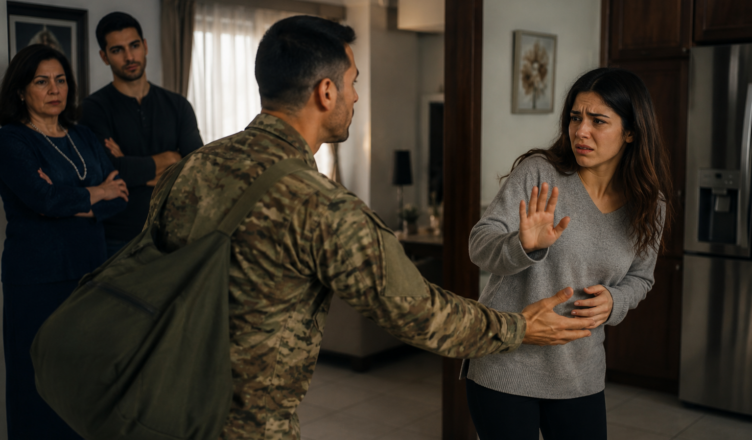
When I came home after eight months working on an offshore oil rig, I expected my wife to run into my arms.
Instead, she locked herself in the bathroom.
At first, I thought she was angry that I had been gone so long. But every time I tried to touch her, she flinched. Every time I entered a room, she seemed to shrink into herself.
My mother insisted it was stress.
“She’s become difficult while you were away,” she said.
My older sister nodded. “You should be grateful we looked after her.”
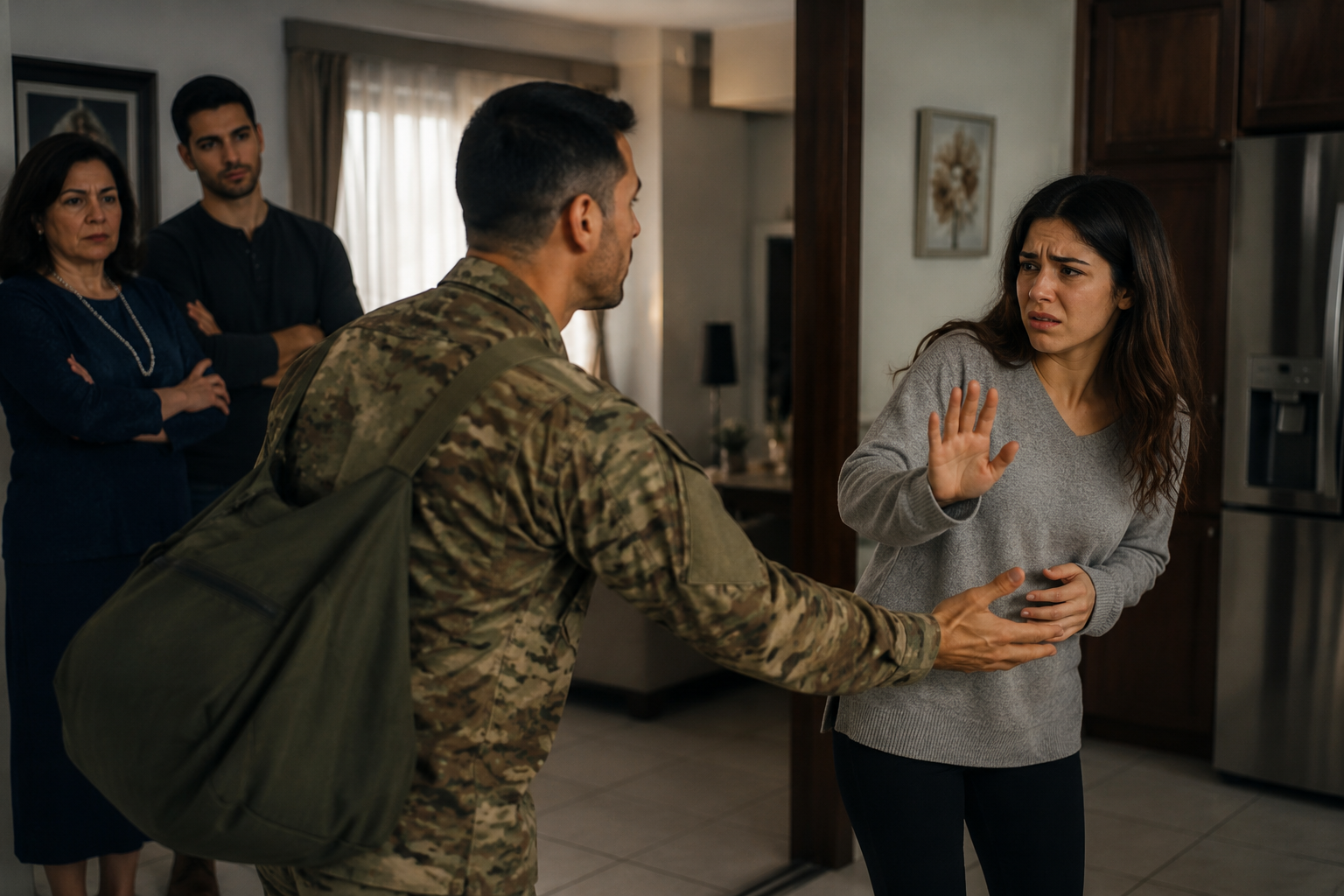
Something felt wrong.
The woman I married was strong, confident, and full of laughter. Now she barely spoke above a whisper.
One evening, I noticed she was limping.
“Are you hurt?” I asked.
She quickly shook her head.
“No.”
But later that night, after she fell asleep, the blanket slipped from her shoulder.
What I saw made my blood run cold.
Dark bruises covered her back.
There were scratches on her arms and a healing cut near her collarbone.
My hands trembled as I gently woke her.
“Who did this to you?” I whispered.
Tears immediately filled her eyes.
For a long moment, she said nothing.
Then she finally broke.
“Your family,” she sobbed. “They said if I told you, they’d make sure you never came home to me again.”
The room went silent.
Downstairs, I could hear my mother and sister laughing while watching television.
For the first time in my life, I realized the people I trusted most had become the people I needed to fear.
I wrapped my arms around my wife and held her while she cried.
Then I looked toward the bedroom door.
“They made one mistake,” I said quietly.
“They thought I would choose them over you.”
The next morning, I acted as if nothing had changed.
I sat at the breakfast table while my mother poured coffee and my sister scrolled through her phone.
“Did you sleep well?” my mother asked with a smile.
“Like a baby,” I replied.
Neither of them noticed that I was watching every movement, every glance they exchanged.
After they left the house, I drove Elena to a doctor.
The examination confirmed what I already feared. The bruises had not come from accidents. Some were weeks old. Others were recent.
Then we visited a lawyer.
For hours, Elena told the truth she had been too frightened to share.
My mother and sister had convinced everyone in town that Elena was unstable. They controlled the finances, intercepted her calls, and pressured her into signing documents she barely understood. When she refused, the intimidation became physical.
The lawyer listened carefully.
“Do you have evidence?” he asked.

Elena hesitated.
Then she handed him an old phone.
Inside were voice recordings.
Messages.
Photos.
Everything.
More than enough.
Over the following weeks, we stayed silent.
My mother believed she had won.
My sister had already started spending money that legally wasn’t hers.
They never suspected that every stolen asset, every forged signature, and every threat was being documented.
Then came the family dinner.
My mother had invited relatives, neighbors, and business associates to celebrate what she called “a new beginning.”
Halfway through dessert, I stood up.
“I have a toast,” I announced.
Everyone raised their glasses.
“I want to thank the people who taught me the true meaning of loyalty.”
My mother’s smile widened.
Then I connected my laptop to the television.
The first recording began to play.
My mother’s voice filled the room.
“Sign the papers, or you’ll regret it.”
The smile disappeared from her face.
A second recording followed.
Then a third.
The room fell silent.
My sister turned pale.
Guests stared in disbelief as message after message appeared on the screen.
Every lie.
Every threat.
Every stolen dollar.
Every act of cruelty.
By the time the presentation ended, no one was speaking.
My mother rose from her chair.
“Alejandro, this isn’t what it looks like—”
“It looks exactly like what it is,” I said.
For the first time in years, nobody rushed to defend her.
Within months, the courts reversed the fraudulent transfers.
The stolen property was returned.
Criminal charges followed.
Some relatives cut ties with my mother and sister entirely.
Others simply walked away in disappointment.
As for Elena, healing took time.
There were difficult days and sleepless nights.
But little by little, her smile returned.
One evening, nearly a year later, we sat on the porch watching the sunset.
She rested her head on my shoulder.
“Do you ever regret choosing me over your family?” she asked softly.
I looked at the woman who had endured so much and still found the strength to keep going.
Then I took her hand.
“No,” I said.
“Because family isn’t defined by blood. It’s defined by the people who protect you when you need it most.”
For the first time since coming home, Elena smiled without sadness in her eyes.
And in that moment, I knew we had finally won.