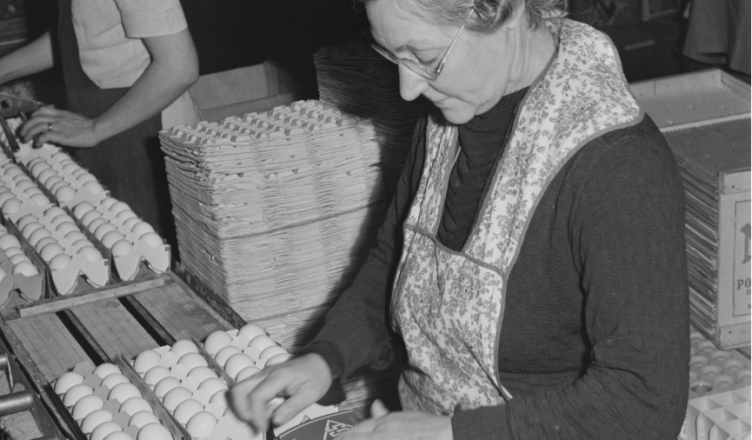
It’s no secret that most products have become significantly more expensive in recent years. This is reflected in the cost of homes and cars, but you don’t buy a new one every week. However, because we shop at supermarket and department stores more frequently, we notice the largest price changes there. Grocery prices can fluctuate, but in recent years, there has been a continual wave of hikes that never seem to subside.
It’s interesting to look back in time to see how items were valued in the past. Previously, we looked at historical hospital bills and 1950s grocery pricing. Today we’ll look at egg prices during the 1940s. Surprisingly, the pricing structure does not match our expectations! In 1945, a dozen eggs cost 50 cents per dozen. Adjusted for inflation, that would be around $8.92 in 2025! This may seem like a lot, but it was the price after it had been capped by the Office of Price Administration, a federal organization established in 1941 to keep prices from growing too high during the period of uncertainty caused by World War II.
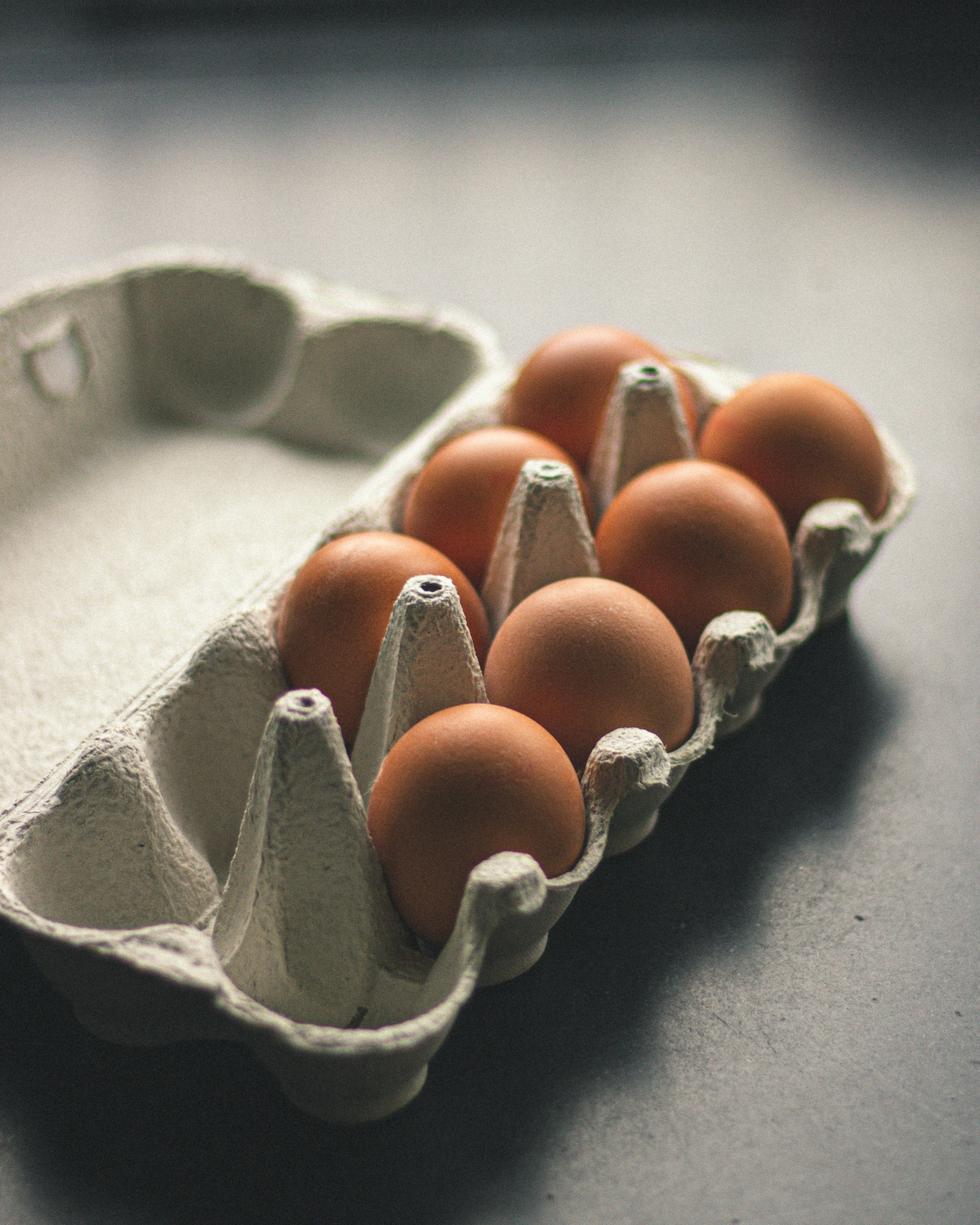
When the agency began to exert its authority, a price list of the highest prices that retailers might charge for certain ordinary items was produced. By 1945, several establishments were displaying signs bragging how much the price of eggs had been limited. The sign stated, “Over $1.00 a dozen in 1920” and “Today’s price 55¢ Doz. thanks to O.P.A.”
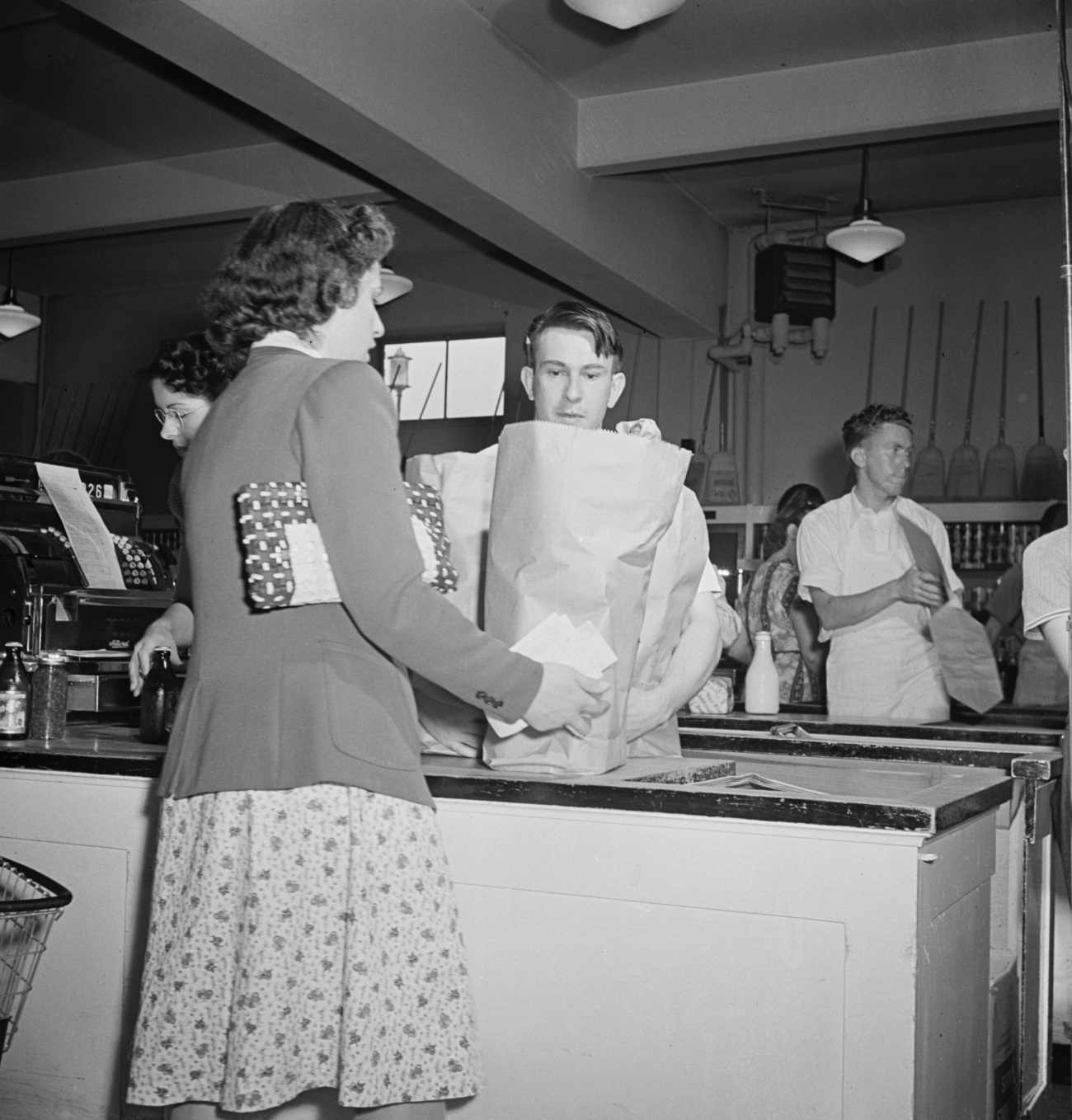
According to the United States Bureau of Labor Statistics price list (bulletin #899) for 1944-1945, the price of eggs in 1944 averaged 45¢ to 67¢ per dozen. Black markets arose around many other items, so it’s not inconceivable that some retailers were selling eggs above the ceiling price and profiting from the scarcity mindset. However, the OPA launched a campaign encouraging shoppers (mostly women) to report any higher prices they encountered. Local price boards were made up of volunteers who reviewed prices, investigated complaints, and advised both buyers and sellers about the program’s peculiarities.