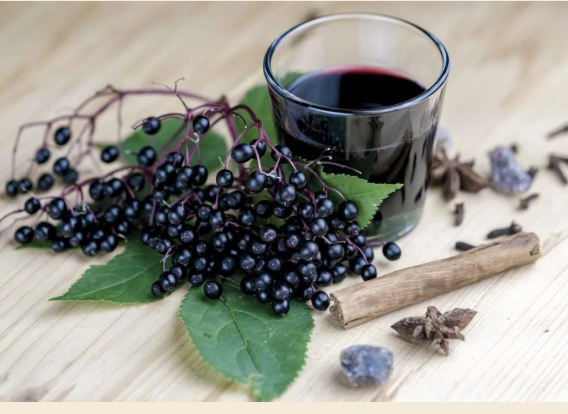
Since ancient times, people have relied on medicinal plants to treat ailments, particularly viral infections. These herbs are high in natural chemicals and can provide powerful support for the body’s defenses. Elderberry is a particularly famous example. Elderberry is well-known for its tart flavor and is frequently used in syrups and preserves. It is also known for its immune-boosting properties.

While not all health claims about herbs are scientifically proven, elderberry is still a popular natural cure for fighting viruses. Recent Research: The Role of Elderberry in Combating Viruses and Flu Black elderberry, which is native to both Europe and North America, is well-known for its blooms and fruit, which are frequently used in seasonal cuisines and beverages. When the berries are fully mature, they are often plucked in late summer or early autumn.
It is critical to harvest elderberries at the proper time; uncooked or underripe elderberries can be toxic. Certain portions of the plant, such as the bark, roots, leaves, blossoms, and new shoots, contain chemicals that can release cyanide under certain conditions, rendering them hazardous if not handled carefully. Despite this, elderberries remain a trusted ingredient in traditional medicines.
Many people believe that these berries boost the immune system and minimize vulnerability to illnesses. Elderberries have been shown in scientific tests to have antiviral properties that aid in infection prevention. The University of Sydney’s Dr. Golnoosh Torabian discovered that elderberries had a direct and powerful effect on influenza viruses.

The study found that elderberry extract interferes with the early phases of infection. It disrupts essential viral proteins, preventing viruses from adhering and entering human cells. Researchers tested elderberry extract on flu viruses and discovered that, while it had modest preventative effects before the virus entered cells, its greatest impact happened after infection had begun.
The extract proved particularly successful in preventing the virus from spreading throughout the body. Co-author Dr. Peter Valtchev described the findings as both shocking and exciting, highlighting that targeting various phases of a virus’s growth could significantly enhance the likelihood of stopping it.
The study also found that elderberry boosts the body’s immunological response by increasing the production of cytokines, which are proteins that govern immunity and inflammation. The strong molecules responsible for these advantages are anthocyanidins, plant pigments known for their antiviral and antioxidant properties.